Vettel's F1 career started in 2007 and, in his first three years, he took nine podiums and five wins, though this was nothing on what was to come. Over the next four years he became the face of F1, winning four consecutive championships and becoming the youngest world champion in the process . Chris Amon holds the record for most laps led and most pole positions without a win.
The driver from New Zealand scored 11 podiums from his 96 starts in the 1960s and 1970s, but terrible luck and poor reliability prevented him from claiming an elusive victory. Amon led seven races during his career with Ferrari, March and Matra, but suffered a series of heart breaking retirements within sight of the chequered flag. Despite never standing on the top step of the podium at a championship race, Amon did score eight victories in non-championship F1 races and also won the Daytona 24 Hours and Le Mans 24 Hours. His controversial victory at Le Mans in 1966, which was shared with countryman Bruce McLaren, was dramatised in the hit 2019 film, Ford vs Ferrari.

Nick Heidfeld holds the record for most podium finishes in Formula 1 without a win. The German driver stood on the podium 13 times from his 183 starts, but never on the top step. Heidfeld spent much of this career fighting for points in the midfield with Sauber, though he did enjoy several competitive seasons when the team was partnered with BMW in 2007 and 2008. The closest Heidfeld came to tasting victory was at the 2007 Canadian Grand Prix, where he finished four seconds behind race winner Lewis Hamilton.

The output and the list of the fastest drivers of all time offers some great names indeed. Of course, there are the obvious ones that rank highly—Ayrton Senna, Michael Schumacher, Lewis Hamilton, all of whom emerge as the top five fastest drivers. However, there are some names that many may not think of as top 20 drivers on first glance. Is that the Kovalainen that finished his career circling round at the back of the Grand Prix field in Caterham, I hear you ask? For those of us who watched Kovalainen throughout his F1 career, it comes as little surprise that he is so high up the list when we consider pure speed. The qualifying speaks volumes, with the median difference of just 0.1 seconds per lap.

Ask Kovalainen himself and he'll tell you that he didn't perform at the same level as Hamilton in the races for many reasons . But in qualifying, his statistics speak for themselves—the model has ranked him so highly because of his consistent qualifying performances throughout his career. I, for one, am extremely happy to see Kovalainen get the data-driven recognition that he deserves for that raw talent that was always on display during qualifying. He kept improving his skills, which helped him become champion two times — in 1972 and 1974.

Best Upcoming F1 Drivers The list displays theall time F1 driver rankingsfor the most amount of races, victories, podiums, pole positions, fastest laps and the total amount of points for each F1 driver. We also have the all time F1 teams ranking and the current F1 Records page. Another German driver to hold several unenviable F1 records is Nico Hülkenberg, who has competed in the most races without scoring a podium and has also scored the most points without a win. Hülkenberg graduated to Formula 1 with Williams in 2010 after claiming the GP2 title the previous year at his first attempt.

Despite recording a surprise pole position in Brazil, he was generally outclassed by his more experienced teammate Rubens Barichello and was not retained by Williams for 2011. Hülkenberg returned to the grid with Force India in 2012 and very nearly won the final race of the season at Interlagos. The German led for 30 laps in the tricky wet/dry conditions before clashing with Lewis Hamilton for the lead and being handed a drive-through penalty.

In a season packed with close racing, controversy, and tight championship battles, it is easy to pay attention to just the winners and losers. But the season has so much more than just the championship battle between an all-time great and a future great driver. There were break-out performances, stunning qualifying laps, talented rookies looking to make their mark, and the return of a two-time world champion who still has unfinished business in the sport. Italian driver Andrea de Cesaris holds the record for the most races without a win, as well as the most retirements of any driver . But even when he wasn't crashing out, de Cesaris still failed to see the chequered flag in more than 70% of his F1 starts at a time when cars were notoriously unreliable.

His worst period of unreliability came in a record 22-race streak from the end of 1986 to the early part of 1988, when he failed to finish any races. Despite retiring from every race during the 1987 season, de Cesaris did stand on the podium in Belgium - he was classified third despite running out of fuel on the last lap. Much like Rubens Barichello, Valtteri Bottas has spent a large chunk of his F1 career driving the best car while his teammate – in this case, Lewis Hamilton – takes all the spoils. Bottas currently holds the record for the most career points without becoming World Champion.

Now into his fifth season with Mercedes, Bottas has taken nine victories and twice finished runner up in the drivers' standings while Hamilton has won four consecutive championships. Italian racer Luca Badoer holds the record for the most F1 starts and most racing laps completed without scoring a point. Badoer made most of his F1 starts with Italian backmarker teams Scuderia Italia, Minardi and Forti in the mid 1990s, but is probably best remembered for his less than stellar comeback with Ferrari in 2009. A long-time test driver for Ferrari, Badoer was drafted in to replace Felipe Massa after the Brazilian suffered head injuries in a freak crash at the Hungaroring. But it wasn't to be a positive return for Badoer, who had last competed in Formula 1 ten years earlier and was hopelessly off the pace. After qualifying and finishing dead last in both the European and Belgian Grands Prix, Badoer was replaced by Giancarlo Fisichella for the remainder of the season.

It is the blended perfection of human and machine that create the winning formula. It is this blend that makes F1 racing, or more pertinently, the driver talent, so difficult to understand. How many races or Championships would Michael Schumacher really have won without the power of Benetton and later, Ferrari, and the collective technical genius that were behind those teams? Could we really have seen Lewis Hamilton win six World Championships if his career had taken a different turn and he was confined to back-of-the-grid machinery? Maybe these aren't the best examples because they are two of the best drivers the world has ever seen. There are many examples, however, of drivers whose real talent has remained fairly well hidden throughout their career.

Those that never got that "right place, right time" break into a winning car and, therefore, those that will be forever remembered as a midfield driver. To come up with this list, we've looked at the number of titles the driver has won, the number of races he entered, the team he was driving for, pole positions, fastest laps, and other criteria. Unfortunately for Vettel the regulation changes in 2014 didn't suit Red Bull , and the team quickly fell back through the pack. He went from nine consecutive wins in the final nine races of the 2013 season to not winning a single race until 2015, and since that 2013 season he's 'only' taken 14 wins.
Despite that he's still widely regarded as one of the best drivers on the grid, and his list of records is likely to stand for many more seasons. He won the F1 world championship once in 1976 and finished his career with 10 wins overall. He also achieved 23 podium finishes, 14 poles, and 8 fastest lap records. The 37-year-old showed last year he is at the top of his game, taking a record 103rd win and the same number of poles.
We now have one way of comparing competitors, but looking at our data we found that in recent years the winner started from pole position in over 50% of Formula 1 races. A driver's starting position depends on how they did in the qualifying round, which in turn depends on how fast they can do a lap on the circuit, without worrying about overtaking others or being overtaken. According to many fans this means that, barring any serious mistakes, the driver's performance depends less on their skill, and more on how fast their car is. Charles Leclerc first made his F1 debut in 2016, but his good looks and charm easily win him a place in our heart every race.

In an interview during Netflix's Drive To Survive, the racing driver shared that it was his dream to drive for the Scuderia Ferrari team. Lap times from qualifying sessions are normalized to adjust for differences in race tracks, which enables us to pool lap times across different tracks. This normalization process equalizes driver lap time differences, helping us compare drivers across race tracks and eliminating the need to construct track-specific models to account for track alterations over time. Another important technique is that we compare qualifying data for drivers on the same race team , where teammates have competed against each other in a minimum of five qualifying sessions. By holding the team constant, we get a direct performance comparison under the same race conditions while controlling for car effects.
Despite the terrible luck that Alonso has exhibited in Formula 1 he's still taken 32 wins, 22 pole positions and 23 fastest laps, and is a firm fan favourite. Pierre might only be 26, but we know it wouldn't take long before he starts winning our hearts at every track across the globe. Pierre then continued to stay driven and delivered more success to the renamed Scuderia AlphaTauri team in 2020 and was back on the podium and scored 110 of the squad's 142 points in 2021. Max Verstappen made waves last year after winning his first world driver championship in Formula One. The 25-year-old, who is also known as the son of former Formula One driver Jos Verstappen has, has shown his promising skills over the years and is expected to take on more podiums this season for the Red Bull Racing team.

Aside from his impressive racing record, the Belgian-Dutch driver also scores in the looks department with his chiseled feature and glistening blue eyes. Riccardo Patrese might now have won any F1 world championships, but he is one of the drivers with the most starts ever — 256. Granted, some drivers have got behind the wheel of the genuine cars on filming days, which are limited to 100km of running, but these have been perfunctory, often split between teammates and hit by bad weather.
So heading into Wednesday, even those with a little real-world experience only have a slender advantage over the rest. As four-time world champion Vettel explains, all the simulator running in the world only has limited value. Pre-season testing, which starts in Barcelona on Wednesday, will be the first time the 20 race drivers have the chance to build some real mileage in these cars.

While they have all completed plenty of laps in the digital realm using driver-in-loop simulators, this is using models of cars created without real-world data. This is why checking the correlation, not just with the driver-in-loop simulator but also other simulation tools such as the windtunnel, CFD and dynamic rigs, is a priority for testing. Over the next four years, he became the face of F1, winning four consecutive championships and becoming the youngest world champion in the process . Differences in race conditions and rule changes leads to significant variations in driver performances.

We identify and remove anomalous lap time outliers by using deviations from median lap times between teammates with a 2-second threshold. For example, let's compare Daniel Ricciardo with Sebastian Vettel when they raced together for Red Bull in 2014. During that season, Ricciardo was, on average, 0.2 seconds faster than Vettel. His most significant achievements include 126 starts, 14 wins, 31 podium finishes, 13 poles, and 12 fastest laps. Despite his struggles to get close to Verstappen on a Saturday, Perez proved to be a much stronger ally on Sundays on his way to taking fourth-place in the championship with 190 points, including a victory and five podiums.

It marked the best performance from a Red Bull driver other than Verstappen since Ricciardo's departure. From the first lap in Bahrain to the final lap in Abu Dhabi, Carlos Sainz proved that he is every bit as capable as LeClerc in the Ferrari. His season started slowly, but the results started coming as he acclimated to his new team. Four podium finishes, including a second place in Monaco and a third place in the season finale at Abu Dhabi, propelled the Spanish ace to fifth place in the world championship. Ricciardo also points out the value of pre-season testing being extended from three to six days this year, which he describes as a "night and day difference". Although some teams lobbied for more running given these are all-new cars, it's at least enough mileage for the drivers to rack up some serious seat time.
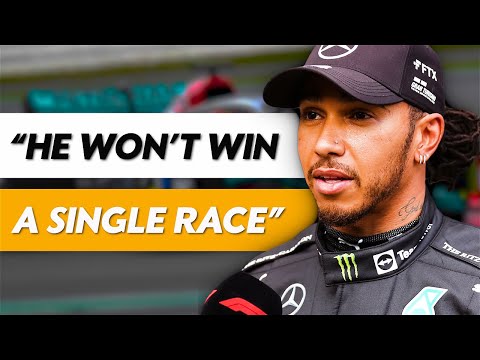
Vettel will be a fascinating case study given he's a driver who can struggle to adapt. He's ferociously fast when the car gives him what he wants – decisive turn-in and the ability to brake relatively late, turn in sharply and then get on the power with conviction – but can struggle at other times. Given how different these cars are and the extent to which they could evolve over time, in particular in the early days before teams are completely on top of them, we will see the drivers stretched in a different direction. Some will surprise and some will disappoint, while for others it will appear seamless. Today, we will pay tribute to those extremely talented and skilled drivers but did not win a world championship.

We had relied on their performances and statistics when they were in F1 to make this top. We must consider the years that each driver has been in the category and that during the first decades, there were many fewer races than today. Alonso's performance in 2012 was one of the finest in F1 history as he challenged for the title and took three wins in a car that was only third or fourth fastest across the season. @tifoso1989 I tend to agree, and I even wonder if GR instinctively knows that this season may not be his to challenge LH hard.
He may be hungrier and better than VB, but the question remains how much he will be allowed to use said hunger and talent. All going to depend on how things start off for the season wrt where the teams are amongst each other and how the drivers like these new cars. GR's best chance of actually fighting LH is if they start off the season only capable of 4ths or worse on the grid. If they are immediately win-capable then TW has to give the nod to LH and keep GR as student to master, imho. Of course GR's role will still be to achieve 2nds whenever possible, if they do come out of the blocks in winning form. McLaren had a mixed preseason and seems to be fourth in the competitive order.MAZEN MAHDI/AFP via Getty ImagesLike Ferrari, McLaren is a sleeping giant and one of the sport's most revered teams.

However, its last constructors' championship victory was in 2007 and it's only just dragged itself out of the dark days of a few years ago when it was struggling to even make it out of the first qualifying session every weekend. McLaren's enormous F1 headquarters in Woking, England looks like something out of a science fiction movie. It was really hard to decide which way to place the two Ferrari drivers in fourth and fifth. Leclerc had some superb qualifying laps this year including two pole positions and showed that if Ferrari can give him a car, Charles is ready to fight for the World Championship. With three seasons in F1 under his belt, Lauda joined Ferrari for the 1974 season and secured two wins and fourth place in the championship for 1974, having often set the pace but suffered misfortune.
In 1975 Lauda took five wins and the first of his three world titles, but it's his 1976 season – and the infamous Nurburgring crash – that's his most famous. In terms of career wins and total career points, Lewis Hamilton is the best Formula 1 driver to have ever graced a circuit. The four-time world champion claimed the returning British marque's first podium when second in Azerbaijan last term. F1's youngest ever world champion is now, at 34, in his 15th full season and hungry to prove he's no fading power. His maiden win in Bahrain in the penultimate race of 2020 earned him a seat and a pivotal role in his teammate's assault on the world championship.

After competing for Toro Rosso and Red Bull Racing, Alexander Albon Ansusinha is finally back on the grid with Williams. The British-Thai racing driver first started racing at the age of 8, and have continuously participated in multiple races over the years before earning his seat in Toro Rosso, alongside Daniil Kvyat. During the second half of the season in 2020, Alex Albon then replaced Pierre Gasly in the Red Bull Racing Team, where he took his first podium finish at the 2020 Tuscan Grand Prix. An algorithm called the Massey's method is one of the core models behind the Insight.

Fastest Driver uses Massey's method to rank drivers by solving for a set of linear equations, where each driver's rating is calculated as their average lap time difference against teammates. Additionally, when comparing ratings of teammates, the model uses features like driver strength of schedule normalized by the number of interactions with the driver. Overall, the model places high rankings to drivers who perform extraordinarily well against their teammates or perform well against strong opponents.
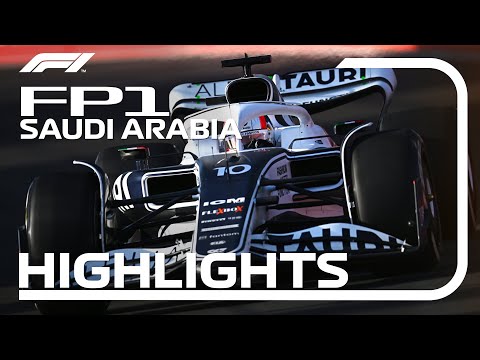
With the sun setting on the 2021 F1® season, and the championship going down to the wire, it's time to update the driver ratings as we go into the final furlong. The 2021 Formula 1 season was one of the most closely fought, dramatic, and chaotic in recent years. 20 drivers lined up to start 23 races across four continents for flat-out wheel-to-wheel racing that pushed their skill and the teams' technical ability to the absolute limit. What separates those rare all-time greats from the very good and the also-rans is how consistently they produce such speed and across how wide a range of conditions.
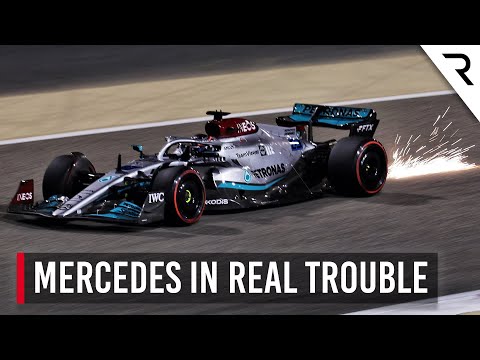
Think of the true legends not just of grand prix racing, but motorsport as a whole, and a facet they all share is adaptability. This characteristic will come to the fore in the coming months as the drivers dial themselves into a new generation of F1 cars. In 2006, Massa signed for Ferrari to be Schumacher's second driver, where he would get his first podiums and victories.